

Images are for guidance only and might not represent the final product.

Havar® Disk

Available Configurations

Properties common to all products in this list

Composition: Co 42/Cr 20/Ni 13/Fe/W/Mo/Mn Form: Disk Material: Cobalt/Chromium/Nickel (Havar®) UNS Number: R30004 Commodity: Alloys
Thickness Diameter
0.0025 mm to 0.5 mm 4 mm to 50.8 mm

Need custom configurations? Please contact us.

Learn more about how Havar® compares to similar cobalt-chromium alloys.

Havar® (UNS R30004) discs are precision-cut circular blanks of cobalt-chromium alloy (Co 42%, Cr 20%, Ni 13%, Fe 19%, Mo 4%, W 2.8% (wt%), density 8.3 g/cm³) supplied ready-to-use for applications requiring exact diameters and consistent thickness, eliminating customer fabrication steps and ensuring dimensional accuracy for critical installations. Available in diameters from 10 to 100+ mm and thicknesses from 2.5 to 500 microns, Havar® discs are the standard choice for cyclotron target window assemblies in medical isotope production facilities, where precise circular geometry, uniform thickness (±5%), and clean edges are essential for reliable sealing, pressure containment, and beam targeting during production of ¹⁸F-FDG for PET imaging, ⁶⁴Cu for theranostics, ⁶⁸Ga for neuroendocrine tumour imaging, ⁸⁹Zr for immunoPET applications, ¹²³I, ¹²⁴I, and ²¹¹At for targeted radionuclide therapy, as well as emerging radioisotopes including ⁴⁴Sc, ⁸⁶Y, and ⁹⁰Y. The disc format provides immediate installation capability for particle detector entrance windows in nuclear physics research including alpha spectrometry, silicon detector arrays, and time-of-flight mass spectrometry; vacuum chamber viewport windows in electron microscopes, synchrotron beamlines, and ultra-high vacuum deposition systems; X-ray equipment window assemblies for medical radiography, industrial inspection systems, X-ray fluorescence analysers, and analytical instrumentation; burst disc pressure relief devices for chemical processing reactors, cryogenic systems, and high-pressure gas containment; diaphragm seals in absolute pressure transducers and differential pressure gauges for aerospace and industrial monitoring; entrance foils for ion implantation equipment and particle accelerators; vacuum isolation windows for plasma physics experiments and fusion research chambers; and sealed radioactive source encapsulation for calibration standards and industrial gauging applications, where dimensional precision, surface flatness, and edge quality directly impact sealing integrity, pressure rating, beam alignment, detection efficiency, and operational safety. Each disc is precision-cut with smooth edges suitable for O-ring sealing or welded assembly, can be further processed through electron beam or laser welding for hermetic enclosures, and maintains dimensional stability from cryogenic temperatures to 400°C. Havar® discs are supplied individually packaged or in sets with custom diameters and thicknesses available to match specific target holder dimensions, beam line configurations, or detector geometries, complete with certificates of analysis including chemical composition, mechanical properties, and dimensional verification upon request (First Article Inspection Report / FAIR or FAI report), providing various solutions for research institutions, medical isotope facilities, and aerospace manufacturers requiring immediate installation without additional fabrication.

Health hazard/Hazardous to the ozone layer
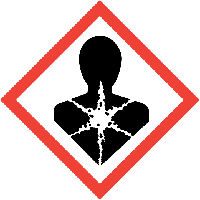
Serious health hazard

Starting at $241.00 each
No Minimum order Free technical support *Free delivery worldwide

Key Features

Exceptional Mechanical Strength (1380–1725 MPa tensile strength)

Havar®'s high tensile strength and pressure resistance allow foils as thin as 25–75 µm to withstand pressure differentials of 10–30 bar, making it the standard choice for cyclotron target windows in medical isotope production.

Radiation Transparency

Its composition minimises beam scattering and attenuation, enabling efficient production of radioisotopes (¹⁸F-FDG, ⁶⁴Cu, ⁶⁸Ga, ⁸⁹Zr) used in PET imaging and targeted therapies without compromising beam intensity.

Non-Magnetic Properties (µr ≈ 1)

Havar® is essentially non-magnetic, making it critical for particle detector entrance windows and other applications in magnetic environments where interference from ferromagnetic materials cannot be tolerated.

Wide Operating Temperature Range (cryogenic to 400 °C)

Dimensional stability and mechanical performance are maintained from cryogenic temperatures up to 400 °C, supporting aerospace pressure transducers, burst discs, and sensor diaphragms across extreme temperature cycles.

Corrosion Resistance

The alloy resists aggressive chemical environments, including those encountered in radioisotope production facilities and industrial processing, ensuring long service life in corrosive conditions.

Ultra-Low Outgassing & Low Hydrogen Diffusion

With an outgassing rate below 10⁻¹⁰ torr·L/(s·cm²) and low hydrogen diffusion, Havar® is ideal for high-vacuum chamber windows, vacuum feedthroughs, and applications where gas contamination (including tritium uptake) must be avoided.

Industrial Applications

Nuclear & Particle Physics
Used for particle detector entrance windows and beamline components where µr ≈ 1 and minimal scattering are required, preserving beam integrity without magnetic interference.
Aerospace & Cryogenic Sensors
Employed in pressure transducers, burst discs, and sensor diaphragms thanks to fatigue resistance and dimensional stability from cryogenic temperatures up to 400 °C.
High‑Vacuum Systems & Electron Optics
Ultra‑low outgassing (<10⁻¹⁰ torr·L/(s·cm²)) and low hydrogen diffusion make Havar® ideal for high‑vacuum chamber windows, vacuum feedthroughs, and applications where gas contamination (including tritium uptake) must be avoided.
Corrosive & Chemical Processing Environments
Corrosion resistance supports long service life in aggressive chemical environments encountered in isotope production and specialized industrial processing.
Custom Precision Components & Fabrication
Supplied as pinhole-free foils (5–500 µm), coils, precision discs, or custom laser‑cut, formed, or machined parts with full traceability and certification—eliminating the need for customer investment in specialized processing equipment.

Frequently Asked Questions

Answers to the questions we are asked most often about Havar® Disk, covering the alloy's properties, why it is specified for precision window and diaphragm assemblies, how discs are profiled and joined, and when disc format is the right choice over foil or coil:

What is Havar® and why is it used in precision disc applications?

Havar® (UNS R30004) is a precipitation-hardenable cobalt-chromium-nickel alloy with additions of tungsten, molybdenum, and manganese. In disc form it delivers the same combination of high tensile strength, radiation stability, non-magnetic behaviour, low outgassing, and corrosion resistance as the rest of the Havar® range, in a pre-profiled circular geometry that seats directly into flanged target holders, pressure transducer housings, and vacuum window assemblies without requiring blanking from flat sheet.

Havar® disc is supplied cold-rolled — what does this mean for how it is used?

Cold rolling is the primary source of Havar®'s mechanical strength. A minimum of 80% cold work is required before age hardening to develop peak tensile and fatigue properties. The disc arrives cold-rolled and ready either for direct use or for age hardening as a final processing step — but all secondary operations, including profiling, drilling, and welding to mounting hardware, must be completed before age hardening is applied. Once fully treated, the material is significantly harder and will not tolerate further deformation.

What is Havar® disc used for in cyclotron and particle physics applications?

The circular disc geometry makes Havar® ideal for cyclotron target entrance windows, particle detector entrance windows, and beamline entrance windows. The disc seats directly in a flanged or threaded target holder and seals the boundary between the pressurised target liquid and the vacuum-side beam optics. Its high tensile strength allows it to withstand that differential pressure without creep or fatigue failure over extended irradiation campaigns. Radiation stability ensures the window properties do not degrade during service, and the low outgassing rate means no contamination of the downstream vacuum environment.

Is Havar® disc suited to pressure diaphragm and transducer applications?

Yes. Havar® disc is used in pressure diaphragms, burst disc pressure relief devices, and diaphragm seals in pressure transducers and differential gauges. Its fatigue resistance under cyclic loading, dimensional stability, and non-magnetic behaviour make it reliable in demanding pressure measurement environments — particularly where stainless steel diaphragms are ruled out by magnetic sensitivity requirements or where the process fluid is corrosive enough that a chromia-passivated cobalt-chromium alloy is needed for long service life.

How is a Havar® disc profiled and edge-finished?

Laser cutting is the preferred method for producing precision circular discs, delivering clean burr-free edges, tight diameter tolerances, and a minimal heat-affected zone. This is particularly important for fully hardened material, where mechanical cutting would introduce edge cracking. Both CO₂ and fibre laser systems are applicable. Wire EDM is an effective alternative for high-precision disc and ring profiles, offering non-contact material removal that avoids the work-hardening and tool wear associated with conventional machining of this alloy. For cold-rolled material prior to age hardening, precision blanking with hardened carbide tooling is also feasible.

Can Havar® disc be welded into a mounting assembly?

Yes. Electron beam and laser welding are the correct joining methods for Havar®, producing hermetic high-integrity bonds with precise heat input and a minimal heat-affected zone. This is essential for thin-disc window assemblies where any heat-induced dimensional change would compromise seating and leak-tightness. Unlike Elgiloy® and Phynox®, Havar® is not suited to TIG welding — the less controlled heat input degrades fatigue performance in the weld zone, which matters in cyclic pressure or beam-on/beam-off service.

What temperature conditions does Havar® disc withstand in service?

Havar® disc offers dimensional stability from cryogenic temperatures up to 400 °C under load and retains a significant proportion of room-temperature strength above 500 °C — considerably better elevated-temperature performance than Elgiloy® or Phynox®, which are limited to approximately 315 °C. Oxidation resistance in air extends to approximately 800 °C. For applications in which a diaphragm or window operates in a thermally cycling environment, Havar®'s tungsten addition stabilises the cobalt matrix and slows the thermally driven processes that would degrade strength in conventional alloys.

Is Havar® disc suitable for ultra-high vacuum applications?

Yes. Havar®'s extremely low outgassing rate makes it fully compatible with high-vacuum and ultra-high-vacuum environments. It is used in synchrotron beamline windows, alpha spectrometry windows, time-of-flight mass spectrometry windows, and plasma physics and fusion research chamber windows. The disc format is particularly practical in these settings because it can be laser welded or EB welded directly into a flange assembly to form a clean, hermetically sealed window unit.

Why does it matter that Havar® disc is non-magnetic?

Havar®'s magnetic permeability of µr ≈ 1 is intrinsic to the cobalt-chromium matrix and is retained after cold rolling and age hardening. This eliminates the field distortion that ferritic or work-hardened austenitic stainless steel diaphragms would introduce near particle detectors, MRI magnets, beam transport optics, and magnetically sensitive pressure transducers. It is also a hard requirement for MRI-compatible device enclosures and implant-adjacent components where any ferromagnetic response is unacceptable.

How does Havar® compare to Elgiloy® or Phynox® for diaphragm applications?

Havar® achieves the highest peak tensile strength of the three alloys and offers superior elevated-temperature stability and radiation resistance. For pressure diaphragms operating at high stress amplitude or elevated temperature, and for any application involving radiation exposure, Havar® is the primary choice. Elgiloy® and Phynox® have higher molybdenum content, giving better pitting and crevice corrosion resistance in chloride-rich process fluids — if the service environment involves prolonged chloride exposure, they are more appropriate. Phynox® is also the preferred specification for implantable medical assemblies in European regulated markets due to its more comprehensive ISO 10993 characterisation.

Can Goodfellow supply Havar® discs to a custom diameter or specification?

Yes. Custom diameters, thicknesses, edge finishes, and laser-profiled features can be supplied with no minimum order quantity. Request a quote with your dimensions, required condition, and any secondary feature requirements and we will confirm what is achievable.

When should I choose disc format rather than foil sheet or coil?

Choose disc when the component is circular in plan and used in an axial mounting arrangement — it removes the blanking and edge-finishing step that would be needed when cutting a circular piece from flat foil. Foil cut pieces suit low-volume or irregular-geometry applications such as beam monitor foils and custom hermetic barriers. Coil provides continuous strip for automated stamping, spring winding, and progressive die operations where length and throughput matter.

Synonyms

Havar® Circular Foil Havar® Round Foil Non-magnetic Havar® Disk

Material Properties

Mechanical Properties
Element Value
Elongation at break( % ) 1
Modulus of elasticity( GPa ) 200-210
Tensile strength( MPa ) 1380-1725
Electrical Properties
Element Value
Electrical resistivity( µOhmcm ) 92
Temperature coefficient( K⁻¹ ) -
Thermal Properties
Element Value
Melting point( C ) 1480
Thermal conductivity( W m⁻¹ K⁻¹ ) 13@23°C
Coefficient of thermal expansion( x10⁻⁶ K⁻¹ ) 12.5@0-50°C
Physical Properties
Element Value
Density( gcm⁻³ ) 8.3
each

Choose Your Options

Close

Available Configurations

Properties common to all products in this list

Composition: Co 42/Cr 20/Ni 13/Fe/W/Mo/Mn Form: Disc Material: Cobalt/Chromium/Nickel (Havar®) UNS Number: R30004 Commodity: Alloys

We are collecting your products, please wait!...

Shipping restrictions and charges may apply for some hazardous materials.

Tolerances

Disc
Thickness <0.01mm ±25%
Thickness 0.01mm - 0.05mm ±15%
Thickness >0.05mm ±10%
Diameter ±0.5mm