

- Materials
- Forms
-
Services
-
Services
-
-
Sectors
-
Supporting cutting edge research and development with advanced materials to your needs.
High performance materials for extreme conditions.
Innovative and lightweight materials with high mechanical properties and durability.
Materials used in chemical engineering from consumables to innovative solutions.
Advanced materials characterized by high electrical or insulation performance.
High quality materials for renewable energy.
Biocompatible and biodegradable materials to the highest standards.
High purity, biocompatible materials for high performance devices and applications.
High purity metals and alloys in various forms and crucibles suitable to your needs.
State of the art materials for the next generation of technologies.
High performance materials for extreme conditions.
Durable materials for corrosive environments.
Foils, disks or windows across a range of materials to facilitate your innovation.
Polymers, metal foils, and sustainable materials for your packaging needs.
Your requirements for unique products and attributes will be met across our 170,000+ product range and customization capabilities.
High-quality materials across branded products in various forms including rods, wires, and foils support space technology needs.
Highest quality materials to support your need for small-quantity specialist materials such as graphite and lithium compounds.
High purity materials to improve the reproducibility and reliability of your evaporation processes.
Academia Aerospace & Aeronautical Automotive Chemical Manufacturing Electronics and Bioelectronics Fuel Cells & Hydrogen Life Science and Biomaterials Storage & Batteries Vacuum Technology Mining and Metals Nanomaterials Nuclear Oil & Gas Optics Packaging Research & Labs Space Technology Medical Devices
-
-
Resources
-
Find out our latest news.
Read our latest insights, and opinions.
Discover our Innovation Discovered podcasts on innovation, products, interesting topics, and more.
Find out how we've worked with our partners
Our latest updates on what we are doing, find out more.
Find out more about us and the great roles we have available for talented individuals. Find out more.
Take a look at our global distributors.
Explore our FAQ resource to help answer your key questions.
Gain a clearer picture of the language used in scientific study
-
- About Us
Toggle Nav


Formula: Hf
Form: Powder
Material: Hafnium
CAS Number: 7440-58-6
Commodity: Metals
Purity:
95%
Max Particle Size:
45μm
Hazard Pictogram:
GHS02
Hafnium Powder is a form of elemental hafnium in powder form. It’s available in 9 variations, with particle sizes ranging from 1 to 45 microns. Hafnium is a lustrous, silvery-gray transition metal that is corrosion resistant and chemically similar to zirconium. Hafnium powder is used in filaments, electrodes, semiconductor fabrication, and as a neutron absorber in nuclear control rods due to its high neutron absorption cross-section. With its refractory properties, Hafnium Powder is also used in superalloys for aerospace applications.
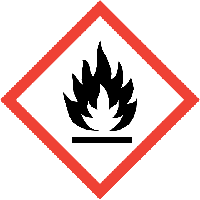
Flammable
Tolerances
Powder
| Mean Particle Size | Nominal | |
|---|---|---|
| Minimum Particle Size | Nominal | |
| Maximum Particle Size | Nominal | |
| Maximum Particle Size | Nominal | |
| Particle Size D10 | Nominal | |
| Particle Size D50 | Nominal | |
| Particle Size D90 | Nominal |
Material Properties for Metals
Atomic Properties
| Element | Value |
|---|---|
| Atomic number | 72 |
| Crystal structure | Hexagonal close packed |
| Electronic structure | Xe 4f¹⁴ 5d² 6s² |
| Valences shown | 4 |
| Atomic weight( amu ) | 178.49 |
| Thermal neutron absorption cross-section( Barns ) | 103 |
| Photo-electric work function( eV ) | 3.9 |
| Natural isotope distribution( Mass No./% ) | 179/ 13.8 |
| Natural isotope distribution( Mass No./% ) | 176/ 5.2 |
| Natural isotope distribution( Mass No./% ) | 180/ 35.2 |
| Natural isotope distribution( Mass No./% ) | 174/ 0.2 |
| Natural isotope distribution( Mass No./% ) | 177/ 18.5 |
| Natural isotope distribution( Mass No./% ) | 178/ 27.1 |
| Atomic radius - Goldschmidt( nm ) | 0.159 |
| Ionisation potential( No./eV ) | 3/ 23.3 |
| Ionisation potential( No./eV ) | 1/ 7.0 |
| Ionisation potential( No./eV ) | 2/ 14.9 |
| Ionisation potential( No./eV ) | 4/ 33.3 |
Mechanical Properties
| Element | Value |
|---|---|
| Material condition | Hard |
| Material condition | Soft |
| Poisson's ratio | 0.26 |
| Poisson's ratio | 0.26 |
| Bulk modulus( GPa ) | 109 |
| Bulk modulus( GPa ) | 109 |
| Tensile modulus( GPa ) | 141 |
| Tensile modulus( GPa ) | 141 |
| Hardness - Vickers( kgf mm⁻² ) | 150-180 |
| Tensile strength( MPa ) | 445 |
| Tensile strength( MPa ) | 745 |
| Yield strength( MPa ) | 365 |
| Yield strength( MPa ) | 240 |
Electrical Properties
| Element | Value |
|---|---|
| Electrical resistivity( µOhmcm ) | 32.2@20@20°C |
| Superconductivity critical temperature( K ) | 0.128 |
| Temperature coefficient( K⁻¹ ) | 0.0044@0-100°C |
Physical Properties
| Element | Value |
|---|---|
| Boiling point( C ) | 4602 |
| Density( gcm⁻³ ) | 13.1@20°C |
Thermal Properties
| Element | Value |
|---|---|
| Melting point( C ) | 2227 |
| Latent heat of evaporation( J g⁻¹ ) | 3700 |
| Latent heat of fusion( J g⁻¹ ) | 122 |
| Specific heat( J K⁻¹ kg⁻¹ ) | 146@25°C |
| Thermal conductivity( W m⁻¹ K⁻¹ ) | 23@0-100°C |
| Coefficient of thermal expansion( x10⁻⁶ K⁻¹ ) | 6@0-100°C |
Other Customers Purchased
-
Zirconium Hydride Powder Formula: ZrH₂
Percentage Purity: 99.5%
Maximum Particle Size: 150µm
Weight: 500g
CAS Number: 7704-99-6
UOM Code: 057-083-47
eachStarting at $218.50
Discounts applied for volume purchases -
Zirconium Boride Powder Formula: ZrB₂
Percentage Purity: 99%
Maximum Particle Size: 45µm
Weight: 50g
UOM Code: 471-359-10
eachStarting at $218.50
Discounts applied for volume purchases -
Zirconium Powder Formula: Zr
Percentage Purity: 99.2%
Maximum Particle Size: 45µm
Weight: 2000g
CAS Number: 7440-67-7
UOM Code: 151-149-03
eachStarting at $179.80
Discounts applied for volume purchases -
Zirconium Carbide Powder Formula: ZrC
Percentage Purity: 99.5%
Maximum Particle Size: 45µm
Weight: 50g
CAS Number: 12070-14-3
UOM Code: 428-605-16
eachStarting at $245.10
Discounts applied for volume purchases -
Zirconium/Aluminum Alloy Precursor Powder (Zr90/Al10) Formula: Zr90/Al10
Mean Particle Size: 45µm
Weight: 50g
Type: Alloy Pre-cursor
UOM Code: 113-318-63
eachStarting at $489.56
Discounts applied for volume purchases -
each
Starting at $331.73
Discounts applied for volume purchases


