

Versatile and Advanced Ceramic Properties
Macor is versatile, can be machined using conventional metalworking tools and has excellent ceramic properties.
As an international materials specialist, we offer a comprehensive range of Macor products for a wide variety of applications and industries.
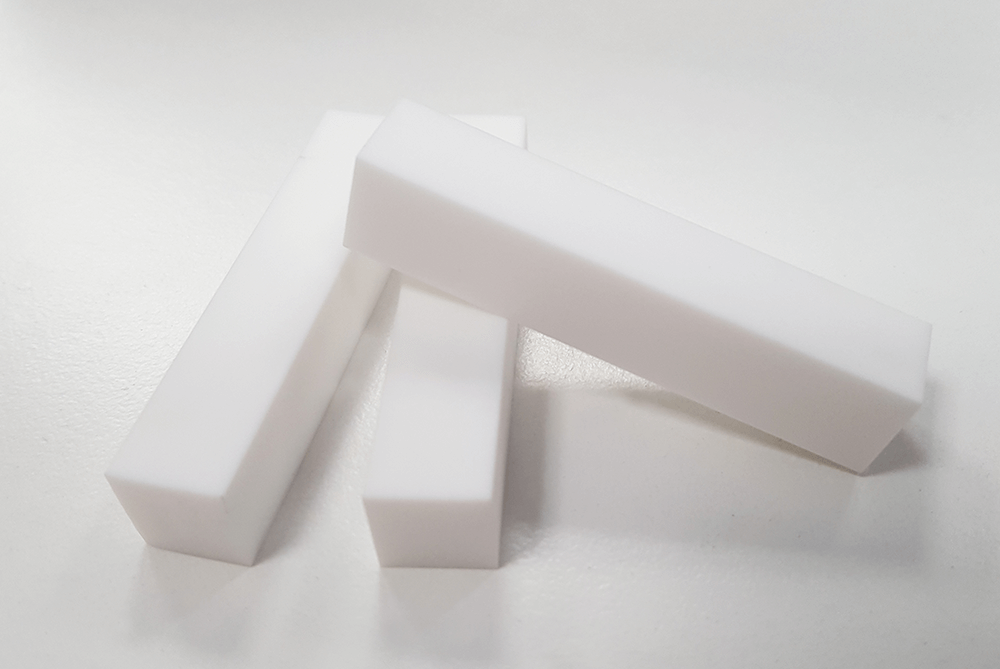
Product Benefits
Macor offers a host of outstanding properties that makes it ideal for highly specialized applications including:

Excellent Thermal, Electrical and Chemical Properties
Macor is renowned for withstanding extreme temperatures, making it suitable for high-temperature environments. It also demonstrates exceptional electrical insulation properties, making it invaluable in electronic applications and exhibits excellent chemical resistance, ensuring durability in harsh environments.

High Precision and Stability
Macor's excellent dimensional stability and precise machinability ensure consistent performance and reliability in critical applications.

Performance
The outstanding thermal, electrical, chemical, and mechanical properties of Macor make it ideal for demanding applications. It can withstand extreme temperatures, vibrations, and harsh environments with exceptional stability and reliability.

Machinability
Unlike traditional ceramics, Macor can be machined using conventional metalworking tools, which enables faster and more cost-effective fabrication processes.
Choosing the Right Product
Having worked for over 75 years with industries such as aerospace, semiconductor, and medical, you can trust our highly experienced team to provide you with the best Macor solution.
Our range of Macor products provides solutions across many industry and manufacturing processes, also for research and development. These include:
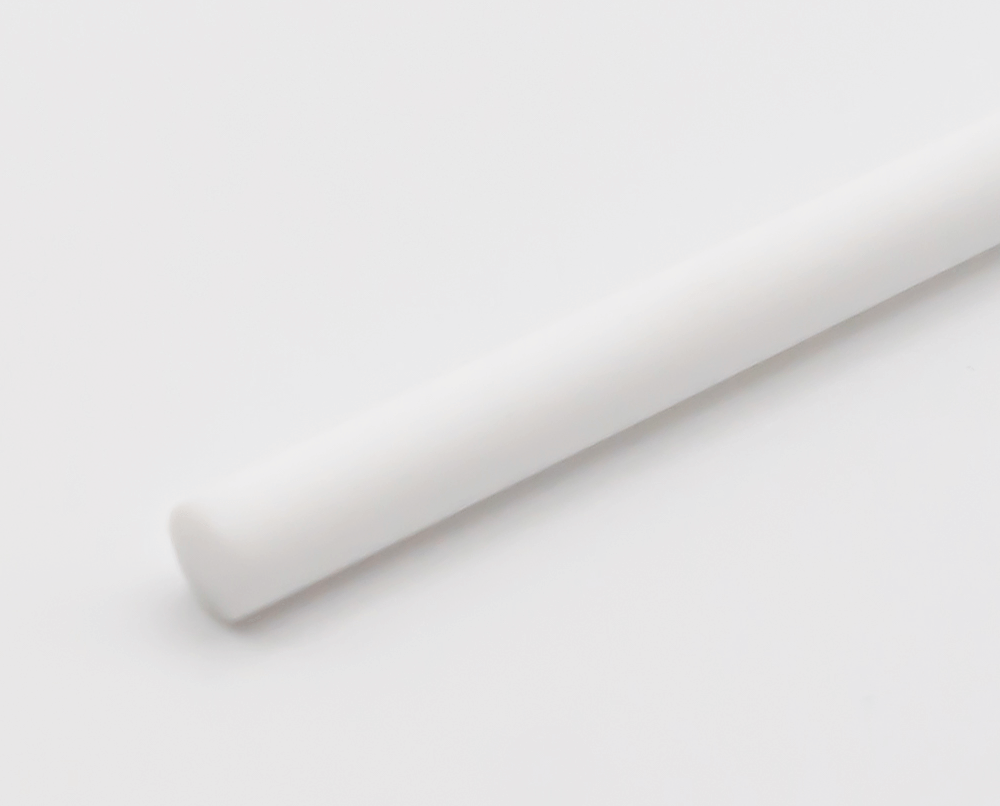
- Macor Rods: Available in various diameters, Macor rods are utilized for machined components, insulators, and spacers.
- Macor Sheets: These thin, flat sheets are suitable for use in fabrication projects requiring precise dimensional control and tight tolerances.
- Macor Disks: Precision machined Macor disks are used in electrical insulators, seals, and other specialized applications.
Our entire range complies with European Directives 2015/863/EU (RoHS 3) and 2000/53/EC (ELV), ensuring their environmental friendliness. As part of our commitment for quality and safety, we also hold the certification for ISO 9001.
Our Product Range
We offer a comprehensive range of stock shapes in sheet, bar, rod and disk.
- From thin 0.5mm thick sheets to the maximum 55mm thick sheets
- Rods from 1.6mm to the maximum 76mm diameter and bars from 10mm x 10mm to 50.8mm x 50.8mm
Our industry-leading Technical Solutions team is ready and waiting to identify the right products for your project.
This service is completely free as we are committed to providing an exceptional level of service that enables you to deliver groundbreaking scientific advancements that shape the future.
Popular Macor Products
- MACOR® Machinable Glass Ceramic Bar Formula: SiO₂ 46/Al₂O₃ 16/MgO 17/K₂O 10/B₂O₃ 7
Side Length: 35mm
Side Length (Of Longer Side): 55mm
Length: 65mm
UOM Code: 092-187-07
eachStarting at $69.11
In stockDiscounts applied for volume purchasesFormula: SiO₂ 46/Al₂O₃ 16/MgO 17/K₂O 10/B₂O₃ 7Side Length: 35mmSide Length (Of Longer Side): 55mmLength: 65mmUOM Code: 092-187-07 - MACOR® Machinable Glass Ceramic Disk Formula: SiO₂ 46/Al₂O₃ 16/MgO 17/K₂O 10/B₂O₃ 7
Thickness: 2mm
Diameter: 25.4mm
UOM Code: 006-503-82
eachStarting at $88.85
In stockDiscounts applied for volume purchasesFormula: SiO₂ 46/Al₂O₃ 16/MgO 17/K₂O 10/B₂O₃ 7Thickness: 2mmDiameter: 25.4mmUOM Code: 006-503-82 - MACOR® Machinable Glass Ceramic Rod Formula: SiO₂ 46/Al₂O₃ 16/MgO 17/K₂O 10/B₂O₃ 7
Diameter: 10mm
Length: 100mm
UOM Code: 006-538-57
eachStarting at $75.69
In stockDiscounts applied for volume purchasesFormula: SiO₂ 46/Al₂O₃ 16/MgO 17/K₂O 10/B₂O₃ 7Diameter: 10mmLength: 100mmUOM Code: 006-538-57 - MACOR® Machinable Glass Ceramic Sheet Formula: SiO₂ 46/Al₂O₃ 16/MgO 17/K₂O 10/B₂O₃ 7
Thickness: 13mm
Length 1: 100mm
Length 2: 100mm
UOM Code: 007-121-45
eachStarting at $78.98
In stockDiscounts applied for volume purchasesFormula: SiO₂ 46/Al₂O₃ 16/MgO 17/K₂O 10/B₂O₃ 7Thickness: 13mmLength 1: 100mmLength 2: 100mmUOM Code: 007-121-45


Applications

Aerospace
Macor's exceptional resistance to high temperatures and thermal shock makes it an ideal material for aerospace applications, such as engine components, insulators and satellite systems.
Medical
With its biocompatible properties and chemical resistance, Macor is the go-to choice for various medical applications, including surgical instruments and analytical equipment.

Industrial
Macor's versatility and ability to withstand harsh environments makes it suitable for industrial applications like specialized machine components, heat exchangers and insulating parts.
Electronics
The excellent electrical insulation properties of Macor make it well-suited for electronic applications, including circuit boards, high-voltage insulators and electrical housings.
Automotive
Many applications in the automotive industry make use of Macor due to its thermal stability and reliability. These include high-temperature sensors, ignition systems and exhaust components.
Why Goodfellow?
- No minimum order
- Over 175,000 advanced materials
- Supply Chain Management:
- sourcing custom materials for your needs
- Dispatched globally within 48 hours
- Materials customization:
- Custom parts for prototyping | Full product modification | Micro-machining | Microfabrication | Rolling
- Free and fast delivery: Worldwide shipping and customs clearance, to your door. All orders are dispatched within 48 hours
- Commercial arrangements:
- Call off orders | Buffer stock | Fixed and contract pricing | Discounts for increased volumes
- We help you innovate into the future.

*Conditions apply
What's New